IPTV Subscription USA: Complete 2026 Buying Guide
Learn how to choose an IPTV subscription USA service, compare features, check legality, avoid scams, and set up IPTV safely on supported devices.
IPTV Subscription USA: How to Choose the Right Service in 2026
An IPTV subscription USA service delivers television programming through an internet connection instead of traditional cable, satellite, or terrestrial broadcasting.
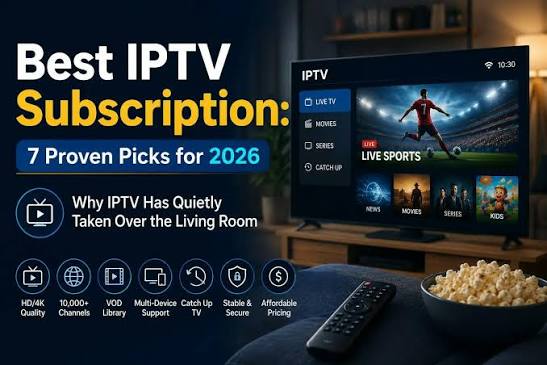
The technology behind IPTV is not new, but the way consumers use internet-based television has evolved considerably. Many households now combine Smart TVs, streaming devices, mobile phones, computers, and dedicated streaming applications to access television and on-demand content.
However, choosing an IPTV service requires more than looking at the number of channels advertised. Reliability, content rights, device compatibility, video quality, customer support, privacy, pricing transparency, and cancellation policies all matter.
Most importantly, consumers should distinguish between IPTV technology and the legality of the particular content service. IPTV as a delivery method is legitimate. The important question is whether a provider has the appropriate rights or licenses to distribute the channels and content it offers.
What Is an IPTV Subscription?
IPTV stands for Internet Protocol Television. Instead of receiving television through a traditional broadcast, cable line, or satellite signal, content is delivered using internet protocols.
Depending on the service, an IPTV platform may offer:
Live television
Video-on-demand content
Catch-up television
Electronic program guides (EPG)
HD and Full HD streaming
4K content where available
Multiple device compatibility
Parental controls
Search and favorites
Cloud or network-based recording features
The exact features depend on the provider and the rights associated with its programming.
How Does IPTV Work?
The basic process is straightforward.
First, the provider receives or distributes authorized video content through its infrastructure. The content is encoded into digital formats and delivered through internet networks.
When you select a channel or program, your compatible application or device requests the stream. The content is then transferred over your internet connection and displayed on your television, phone, tablet, or computer.
Your viewing experience therefore depends on several factors:
Internet speed
Wi-Fi quality
Device performance
Network congestion
Provider infrastructure
Video resolution
Streaming application
Distance and routing to the streaming servers
A fast internet plan can help, but it cannot compensate for poor provider infrastructure.
How to Choose an IPTV Subscription USA Service
Choosing a service should involve more than searching for the provider advertising the largest channel count.
1. Check Content Legitimacy
This should be your first consideration.
A trustworthy service should be transparent about the content it distributes and the rights associated with that programming. Be cautious about providers promising premium channels, major sporting events, movies, or international networks at unrealistically low prices without explaining how the content is licensed.
A legitimate subscription should provide clear information about its service, terms, contact methods, and billing.
2. Check Device Compatibility
Before subscribing, confirm that the service works with your preferred hardware.
Common IPTV-compatible platforms can include:
Android TV
Google TV devices
Fire TV devices
Compatible Smart TVs
Apple TV
Android smartphones and tablets
iPhone and iPad
Windows computers
macOS computers
Web browsers
Compatibility can vary significantly. A service that works well on Android TV may not offer the same application experience on another Smart TV platform.
3. Evaluate Streaming Quality
Resolution is another important consideration.
Standard-definition content generally requires less bandwidth, while HD, Full HD, and 4K streams require progressively more bandwidth and capable hardware.
As a general starting point, a household might consider:
SD: around 5 Mbps
HD: around 10 Mbps
Full HD: around 20 Mbps
4K: approximately 30–50 Mbps or more
These are practical guidelines rather than guarantees. Network congestion, Wi-Fi conditions, simultaneous users, and stream compression can affect actual performance.
4. Look at the Electronic Program Guide
An EPG can make a significant difference in everyday usability.
Instead of opening individual channels randomly, an EPG allows viewers to see programming schedules and navigate upcoming shows more efficiently.
For people who watch live television frequently, a well-designed guide can be more valuable than an enormous channel list.
5. Examine Customer Support
Reliable support is especially important when setting up an unfamiliar streaming service.
Look for clearly documented support channels and useful setup instructions. A provider that only communicates through an anonymous contact method and offers no meaningful documentation deserves additional caution.
6. Understand Billing and Cancellation
Before purchasing an IPTV subscription USA plan, check:
Total price
Billing frequency
Automatic renewal terms
Refund policy
Cancellation procedure
Trial conditions
Number of supported devices
Whether taxes or additional charges apply
Avoid entering payment details when the pricing structure is unclear.
IPTV Subscription USA vs. Cable and Traditional Streaming
IPTV can provide a flexible internet-based television experience, but it isn't automatically better than every alternative.
IPTV
Advantages:
Internet-based delivery
Works across various supported devices
Can combine live TV and on-demand content
Flexible viewing environment
Potentially useful for households already using streaming hardware
Disadvantages:
Requires a stable internet connection
Quality depends on provider infrastructure
Compatibility varies
Some services may have unclear licensing
Poorly managed services can suffer from buffering
Cable or Satellite
Advantages:
Established infrastructure
Bundled television and internet options may be available
Traditional customer support
Familiar channel packages
Disadvantages:
Equipment and installation requirements
Less flexibility for some viewing environments
Contracts or additional fees may apply
Traditional packages can become expensive
Conventional Streaming Platforms
Mainstream streaming services are often focused on specific types of content, such as movies, series, sports, or original programming.
They may be preferable when you want a well-established platform with transparent licensing, polished applications, and predictable content libraries.
Pros and Cons of an IPTV Subscription USA
Pros
Internet-based television delivery
Flexible device options
Convenient access to live programming
Can support high-definition streaming
May offer live and on-demand viewing
Useful for households moving away from traditional television
Cons
Dependent on internet connectivity
Performance can vary between providers
Not every service is available on every device
Large channel claims don't necessarily mean better quality
Some providers may operate without appropriate content rights
Step-by-Step: How to Get Started With IPTV
Step 1: Identify Your Viewing Requirements
Decide what you actually need.
Consider whether you primarily watch live TV, sports, news, international programming, movies, or on-demand content.
Step 2: Check Your Internet Connection
Run a speed test and consider how many devices will use your connection simultaneously.
A household streaming several devices at once may require considerably more capacity than a single-TV household.
Step 3: Choose a Compatible Device
Determine whether you'll watch on a Smart TV, Fire TV device, Android TV, Apple TV, smartphone, tablet, or computer.
Step 4: Research the Provider
Check its website, terms, support information, pricing, content rights, compatibility documentation, and reputation.
Don't choose a provider solely because it advertises an unusually large channel count.
Step 5: Select an Appropriate Plan
Choose the shortest practical commitment when evaluating an unfamiliar service. A monthly option can reduce the risk of committing to a service that doesn't meet your expectations.
Step 6: Install the Official Application
Use an official application or a reputable IPTV player that supports the provider's service. Follow the provider's legitimate setup instructions.
Step 7: Test Performance
After setup, check several types of content at different times of day.
Pay attention to:
Loading time
Picture quality
Audio synchronization
Buffering
EPG accuracy
Application stability
Common IPTV Mistakes to Avoid
Choosing Based Only on Channel Count
"Thousands of channels" sounds impressive, but quantity doesn't tell you whether the service is reliable, legal, or useful.
Ignoring Licensing
A low-cost service offering premium programming without clear authorization can create legal and security concerns.
Buying a Long Subscription Immediately
If you're unfamiliar with a provider, a shorter plan can be a safer way to evaluate service quality and support.
Using Poor Wi-Fi
Even a good IPTV provider can perform badly when the television is located far from a router or connected through a congested wireless network.
Ignoring Privacy
Don't provide unnecessary personal information to unknown services. Use strong passwords and review payment and account-security practices.
Installing Unknown Apps
Avoid downloading suspicious applications from random websites. Whenever possible, use official app stores or trusted sources.
Practical Tips for Better IPTV Performance
If you're experiencing buffering, try these steps:
Restart your router and streaming device.
Test your internet speed.
Move your device closer to the router.
Use Ethernet when practical.
Reduce simultaneous high-bandwidth activity.
Check whether the problem occurs on multiple channels.
Update the streaming application.
Contact the provider if its infrastructure appears to be responsible.
If only one channel repeatedly buffers while other services work normally, the issue may not be your internet connection.
Frequently Asked Questions
Is IPTV legal in the USA?
IPTV technology itself is legal. The key issue is whether the provider has the necessary rights to distribute the television channels, movies, sports, or other content it offers. Consumers should choose services that clearly operate within applicable copyright and licensing requirements.
How much does an IPTV subscription USA service cost?
Pricing varies significantly depending on the provider, content, features, number of devices, and billing period. Instead of focusing exclusively on the cheapest plan, compare total cost, transparency, support, reliability, and content rights.
What internet speed is recommended for IPTV?
For HD viewing, around 10 Mbps can be a reasonable starting point for one stream. Full HD may require around 20 Mbps, while 4K can require 30–50 Mbps or more. Multiple simultaneous streams require additional capacity.
Can I use IPTV on a Smart TV?
Yes, depending on the television platform and the service. Some providers have dedicated applications, while others work through compatible IPTV player applications.
Can IPTV work on Fire TV?
Many IPTV services and players support Fire TV devices. However, compatibility depends on the specific application and provider. Always use legitimate applications and follow the service's official setup instructions.
Does IPTV require cable or satellite?
No. IPTV uses an internet connection rather than a traditional cable or satellite television signal.
Why does IPTV keep buffering?
Buffering can result from slow internet, weak Wi-Fi, network congestion, device limitations, application problems, or issues with the provider's streaming infrastructure.
Is IPTV better than cable?
It depends on your priorities. IPTV can provide greater internet-based flexibility, while cable may offer a more established television infrastructure. Comparing price, channels, reliability, equipment, and customer support is more useful than declaring one universally better.
Should I choose a yearly IPTV subscription?
Not necessarily. If you're evaluating an unfamiliar provider, consider a shorter commitment first. This allows you to assess reliability, application quality, customer support, and overall value before paying for a longer period.
Final Thoughts
An IPTV subscription USA can be a practical option for viewers who want internet-based access to television and compatible on-demand content. However, the best choice isn't necessarily the service with the biggest channel list or lowest advertised price.
Focus on the fundamentals: legitimate content rights, reliability, device compatibility, streaming quality, transparent pricing, customer support, privacy, and flexible subscription terms.
Before purchasing, verify exactly what you're getting, test your internet connection, check compatibility with your preferred device, and avoid services that make unrealistic promises or provide little information about their business and content rights.
For USA and Canadian consumers, a thoughtful evaluation can help distinguish a dependable internet-TV solution from a service that may create unnecessary reliability, privacy, billing, or legal concerns.
Author Bio
About the Author:
The author is an SEO and digital-content writer specializing in technology, streaming, consumer internet services, and practical how-to content. Their approach focuses on clear explanations, real-world usability, responsible recommendations, and search content designed to answer users' questions rather than simply target keywords.
Comment as Guest