IPTV for Smart TV: Setup, Apps, Tips & Legal Guide(2026)
Learn how IPTV for Smart TV works, how to choose a provider and player, set up Firestick and Smart TVs, fix buffering, and stream safely in the USA and Canada.
IPTV for Smart TV: Complete Guide to Choosing, Setting Up, and Using IPTV Safely
If you are searching for IPTV for Smart TV, you probably want something simpler than switching between multiple apps, cables, and streaming devices. IPTV can deliver live television, video-on-demand (VOD), electronic program guides (EPG), and other internet-based programming directly to a compatible TV or streaming device.
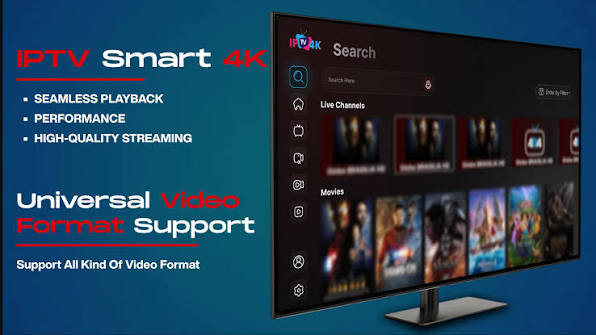
But there is an important distinction that many IPTV guides overlook: an IPTV player is not the same thing as an IPTV service provider. Your TV may have the right app and still show nothing because you do not have a valid content subscription. Likewise, a provider can offer a large catalog but perform poorly because of overloaded servers, weak device support, or poor compatibility.
The best approach is to evaluate the complete setup—from your TV's operating system and internet connection to the provider's licensing, app compatibility, EPG, VOD support, privacy practices, and customer support.
This guide walks through the entire journey:
Understand → Compare → Choose → Install → Set Up → Test → Troubleshoot → Use Safely
Table of Contents
What Is IPTV for Smart TV?
How IPTV Works on a Smart TV
IPTV Provider vs IPTV Player
Which Smart TVs Support IPTV?
How to Choose an IPTV Service
How to Set Up IPTV on a Smart TV
Using IPTV With Firestick
Streaming Quality and Internet Speed
EPG, Live TV, VOD, and Catch-Up
IPTV Buffering and Troubleshooting
Privacy and Security
IPTV in the USA
IPTV in Canada
Pros and Cons
Common Mistakes to Avoid
FAQs
Conclusion
What Is IPTV for Smart TV?
IPTV, or Internet Protocol Television, delivers television programming over an internet connection instead of relying exclusively on traditional cable, satellite, or terrestrial broadcast delivery.
For a Smart TV, IPTV may be accessed through a dedicated application, a built-in platform, a web interface, or an external streaming device such as a Fire TV Stick.
IPTV can include several types of content:
Live television channels
Video on demand (VOD)
Movies and TV programs
Electronic program guides (EPG)
Catch-up or replay features
Live events
Multiple language or regional streams
However, IPTV itself is a delivery method, not a guarantee that every service offering IPTV is legitimate or licensed.
That distinction matters when comparing IPTV services in the USA and Canada.
How IPTV Works on a Smart TV
A typical IPTV setup has four components:
Internet connection
Smart TV or streaming device
IPTV player/application
Authorized IPTV content provider
The player is responsible for displaying the content. The provider supplies the actual streams and associated information such as channel lists, program data, and VOD catalogs.
A simplified setup looks like this:
Internet → IPTV Provider → IPTV Playlist/Account → IPTV Player → Smart TV
The exact process varies by service.
Some providers operate their own applications, while others supply credentials or playlist information that can be entered into a compatible IPTV player.
This is why simply downloading an IPTV app does not automatically provide television channels.
IPTV Provider vs IPTV Player
This is one of the most important concepts to understand before buying anything.
Feature | IPTV Provider | IPTV Player |
|---|---|---|
Supplies content | Yes | No |
Provides channels | Usually | No |
Provides VOD | Depending on service | Displays available VOD |
Provides EPG data | Depending on service | May display it |
Handles streaming servers | Usually | No |
Main purpose | Content delivery | Playback/interface |
Subscription required | Usually | Depends on app |
What Is an IPTV Provider?
An IPTV provider is the company or service responsible for supplying the television streams or other content you access.
When evaluating one, look beyond channel quantity. Check:
Whether it has appropriate content rights
Supported devices
Customer support
Billing transparency
Privacy policy
App availability
EPG quality
VOD functionality
Connection reliability
Cancellation terms
What Is an IPTV Player?
An IPTV player is software used to play compatible streams.
A player may support features such as:
Channel categories
Favorites
EPG
Subtitles
VOD libraries
Multiple playlists
Parental controls
Audio-track selection
A high-quality player cannot fix an unreliable or unauthorized source.
Which Smart TVs Support IPTV?
Compatibility depends primarily on the TV's operating system and the application you want to use.
Common Smart TV platforms include:
Google TV / Android TV
Samsung Smart TV
LG Smart TV
Amazon Fire TV
Roku TV
Apple TV through compatible apps or AirPlay-supported setups
Other proprietary Smart TV operating systems
The key question is not simply "Does my TV support IPTV?"
Instead ask:
"Does my TV support a compatible IPTV application or the provider's official application?"
Older televisions can present additional limitations. An IPTV app may require a newer operating-system version, sufficient memory, or specific DRM and playback capabilities.
If your TV does not support the required application, an external streaming device can sometimes provide a practical alternative.
How to Choose an IPTV Service
Choosing an IPTV service is where you should spend the most time.
A professional-looking website and a long channel list are not enough.
1. Check Content Licensing
This should be your first filter.
A legitimate service should have appropriate rights or authorization for the content it distributes in the markets where it operates.
Be cautious about services making extraordinary claims such as unlimited premium programming for an unusually low fee while providing little information about the business or content rights.
2. Check Device Compatibility
Before subscribing, confirm that the service supports your exact setup.
For example:
Samsung TV
LG TV
Android TV
Google TV
Fire TV Stick
Fire TV
Apple TV
Smartphone
Tablet
Computer
Do not assume that compatibility with Android automatically means compatibility with every Smart TV.
3. Look at EPG Support
An EPG is the electronic program guide that tells you what is currently airing and what is scheduled next.
A useful EPG should have:
Accurate program names
Correct time zones
Logical channel mapping
Reasonably complete schedule data
An EPG that is consistently wrong can make an otherwise usable service frustrating.
4. Examine VOD Support
If movies and on-demand programs matter to you, check whether VOD is actually included.
Important questions include:
Is VOD available on your device?
Does the player support categories?
Are subtitles available where applicable?
Does the service provide appropriate rights for the content?
Is the VOD catalog clearly explained?
5. Review Support and Policies
Before paying, look for:
Refund policy
Cancellation terms
Privacy policy
Contact information
Terms of service
Supported devices
Troubleshooting documentation
A service that hides basic subscription information creates unnecessary risk.
How to Set Up IPTV on a Smart TV
The exact steps depend on your TV and provider, but the general process is straightforward.
Step 1: Confirm Your TV Platform
Open your television's settings and identify its operating system and model.
This helps you determine which IPTV applications are compatible.
Step 2: Choose a Legitimate IPTV Provider
Confirm that the provider has the necessary rights to distribute its programming.
Do not choose solely on channel count.
Step 3: Install a Compatible IPTV Player
Use your television's official application store whenever possible.
Search for the player recommended by your provider or an established compatible player.
Step 4: Obtain Your Authorized Credentials
Depending on the service, you may receive:
Username and password
Playlist URL
M3U playlist
Xtream-compatible login details
Provider-specific account credentials
Only use credentials supplied by an authorized service.
Step 5: Enter the Details
Follow the IPTV application's instructions to add your account or playlist.
Double-check:
Username
Password
Server address
Playlist URL
Expiration date
EPG settings
A single typo can prevent the service from loading.
Step 6: Load the Channel List
Allow the application to retrieve the available content.
Depending on the service, this could include:
Live TV
Movies
Series
EPG
Catch-up content
Step 7: Test Several Streams
Do not test only one channel.
Try:
A standard-definition stream
An HD stream
A higher-resolution stream if available
Different categories
VOD
EPG
Testing multiple functions gives you a better idea of whether the problem is isolated or systemic.
Using IPTV With Firestick
Fire TV devices are popular because they can provide a flexible way to run streaming applications on televisions.
Amazon's current Fire TV ecosystem includes Fire TV streaming devices and Smart TVs, with newer devices also moving toward Amazon's Vega OS platform. Compatibility can therefore vary by device generation and operating system.
For an IPTV setup, the general process is:
Connect the Fire TV device to your television.
Connect it to the internet.
Sign in to the appropriate Amazon account.
Install a compatible IPTV application from an official source when available.
Sign in or enter your authorized IPTV credentials.
Configure EPG and playback settings.
Test live channels and VOD.
Amazon documents that Fire TV can support Android applications on relevant Fire OS devices, while newer Fire TV hardware may use Vega OS, so you should check the exact model before assuming an app will work.
Avoid downloading random APK files from unknown websites simply because an application is unavailable in your TV's app store. Sideloading is technically possible on compatible Fire TV devices, but the source and security of the application matter. Amazon itself documents sideloading primarily as a development/testing method.
Streaming Quality and Internet Speed
Your internet connection is only one part of streaming performance, but it is an important one.
As a practical starting point, many households use approximately:
Video Quality | Practical Starting Point |
|---|---|
SD | Around 5 Mbps |
HD | Around 10 Mbps |
Full HD | Around 20 Mbps |
4K UHD | Around 30–50 Mbps or more |
These are guidelines rather than guarantees. A service can buffer even when your speed test looks excellent.
Why?
Because real-world playback also depends on:
Server capacity
Network congestion
Wi-Fi interference
Router performance
Distance from the access point
Device processing capability
Stream bitrate
Peak-time traffic
A 100 Mbps internet plan does not automatically guarantee smooth IPTV playback.
Wi-Fi vs Ethernet
If your Smart TV supports Ethernet, a wired connection can be useful for troubleshooting inconsistent Wi-Fi.
For a TV located far from the router, you can also consider:
5 GHz Wi-Fi
Mesh Wi-Fi
Ethernet
A better-positioned access point
The goal is not simply to buy faster internet. It is to create a stable connection between the TV and your network.
EPG, Live TV, VOD, and Catch-Up
These features are often treated as marketing terms, but they serve different purposes.
Live TV
Live TV delivers programming as it is being broadcast or streamed.
This is usually the primary reason people choose IPTV.
EPG
EPG provides a schedule of programming.
A good EPG can make IPTV feel more like a traditional television service because you can see what's currently playing and what's coming next.
VOD
VOD allows you to select movies or programs whenever you want instead of waiting for a scheduled broadcast.
Catch-Up
Catch-up lets viewers watch certain previously aired programs when the provider supports the feature.
Not every IPTV provider offers every feature, and availability may vary by channel or region.
IPTV Buffering and Troubleshooting
Buffering is one of the most common IPTV complaints, but blaming the IPTV provider immediately can lead to the wrong solution.
Use this troubleshooting sequence.
1. Check Other Streaming Services
Open another legitimate streaming application.
If Netflix, YouTube, or another service also struggles, the problem may be your network rather than IPTV.
2. Test Another IPTV Channel
If only one channel buffers while others work normally, the problem may be associated with that particular stream.
3. Restart the Application
Completely close the IPTV app and reopen it.
4. Restart the TV or Fire TV
A simple restart can clear temporary application or memory problems.
5. Test Your Network
Run a speed test near the television.
More importantly, look for:
Packet loss
Unstable latency
Weak Wi-Fi signal
Sudden speed drops
6. Try Ethernet
If possible, temporarily connect the device through Ethernet.
If buffering disappears, your Wi-Fi environment deserves further investigation.
7. Check EPG Separately
If live video works but the guide is empty or inaccurate, the issue may be EPG data rather than streaming.
8. Update the App
An outdated application can create compatibility or playback problems.
9. Contact the Provider
If other internet services work correctly and multiple IPTV streams consistently fail, provide the provider with useful diagnostic information rather than simply saying "IPTV doesn't work."
Mention:
Device model
App name
Channel/category affected
Time of failure
Error message
Whether other channels work
That makes support much more effective.
Privacy and Security
IPTV users should think about security just as they would with any internet-connected service.
Avoid Unknown APK Sources
Unofficial applications can create unnecessary security risks.
Where possible, use trusted application stores and official provider applications.
Protect Your Account
Use a unique password for your IPTV account, particularly if the provider offers account management through a website.
Check App Permissions
An IPTV player should not automatically require access to unrelated personal information.
Review permissions on your device and question applications that request access that appears unnecessary for playback.
Be Careful With Payment Information
Before subscribing, verify that the website uses secure payment processing and provides clear billing information.
Do not send payment details through informal chat messages simply because a seller promises a discount.
IPTV in the USA
IPTV technology itself is not inherently illegal in the United States. The important issue is whether the service has the necessary rights to distribute the content it offers.
U.S. copyright law provides protections for copyrighted works distributed online, and the Digital Millennium Copyright Act also addresses unauthorized access and circumvention of technological protections.
For consumers, the practical rule is simple:
Use IPTV services that are authorized to provide the programming you are watching.
Be particularly cautious with services that:
Offer premium programming without explaining licensing
Ask users to bypass access controls
Promote unauthorized copies
Encourage copyright circumvention
Constantly change domains
Have unclear ownership or billing information
The fact that a stream technically plays on a Smart TV does not establish that the stream is legally authorized.
IPTV in Canada
The same fundamental principle applies in Canada: IPTV technology and internet-based television are not automatically illegal.
The CRTC explains that online audiovisual services can operate through the internet and that access to particular content depends heavily on distribution rights and licensing arrangements. Geoblocking, for example, may be used because rights differ by territory.
The CRTC also distinguishes internet-based services from traditional broadcast distribution and explains that online services do not simply become authorized to distribute every program because the content is technically accessible online.
For Canadian consumers, check whether the service has the appropriate rights to distribute the programming in Canada.
This is especially important for sports, premium television networks, movies, and other content where territorial licensing is common.
Pros & Cons
Pros
Can combine live TV and on-demand content in one interface
Works with many modern Smart TV platforms
Can reduce the need for traditional set-top boxes
EPG can make channel navigation easier
VOD provides flexible viewing
Fire TV and other streaming devices can expand compatibility
Internet-based delivery can work across multiple device types
Cons
Quality depends on both the provider and your network
Not every Smart TV supports every IPTV application
Older TVs may have compatibility limitations
EPG data can sometimes be incomplete or inaccurate
VOD and catch-up availability varies
Poorly operated services can disappear without warning
Unauthorized services can create copyright and security risks
Higher-resolution streams require more network capacity
Common Mistakes to Avoid
Mistake 1: Choosing the Biggest Channel List
More channels do not necessarily mean better service.
A smaller, properly licensed service with good compatibility and reliable support may be a better fit.
Mistake 2: Assuming Every IPTV App Provides Channels
It does not.
The player and content provider are separate in many setups.
Mistake 3: Ignoring Your TV's Operating System
Always confirm compatibility with your exact TV model or streaming device.
Mistake 4: Blaming Wi-Fi Immediately
Test other streaming services and, if possible, Ethernet before deciding that the IPTV provider is responsible.
Mistake 5: Buying Before Checking Cancellation Terms
Read the billing and refund policy before subscribing.
Mistake 6: Installing Random APK Files
A working application is not necessarily a safe application.
Mistake 7: Assuming a VPN Makes Unauthorized IPTV Legal
A VPN can change how your internet traffic is routed or protect privacy in certain situations, but it does not transform unauthorized content into authorized content or override copyright and licensing requirements.
Practical Tips for a Better IPTV Experience
If you want a more reliable Smart TV setup, focus on the entire system rather than one specification.
Before subscribing:
Identify your TV's operating system.
Confirm application compatibility.
Check the provider's licensing information.
Review cancellation and refund policies.
Check whether EPG is supported.
Confirm whether VOD is included.
Verify supported resolutions.
Check customer-support options.
After installation:
Update the TV and IPTV application.
Use a stable network connection.
Test several channels.
Configure the EPG correctly.
Organize favorite channels.
Remove applications you no longer use.
Keep your account credentials private.
A useful habit is to test your IPTV setup during the times you normally watch television. A service that works perfectly in the afternoon may behave differently during busy evening periods because network and server conditions can change.
FAQs
1. Can I use IPTV on a Smart TV?
Yes. IPTV can be used on compatible Smart TVs through an appropriate IPTV application or an official provider application. Compatibility depends on the television's operating system, model, application requirements, and the IPTV service you choose.
2. Do I need an IPTV player and an IPTV provider?
Not always, but many IPTV setups use both. The provider supplies authorized content, while the player provides the interface used to play that content. Some providers combine both functions inside their own application.
3. Can I use IPTV on Samsung Smart TV?
Potentially, yes. The exact options depend on your Samsung TV model, operating system, available applications, and the provider's supported devices. Check compatibility before purchasing a subscription.
4. Can I use IPTV on an LG Smart TV?
Many LG Smart TV models can run compatible streaming applications, but application availability varies by model and platform. Always verify that the specific IPTV application supports your TV before subscribing.
5. Does IPTV work on Firestick?
Yes, compatible IPTV applications can run on supported Fire TV devices. However, Fire TV's operating-system landscape is changing, so compatibility should be confirmed for the exact device generation you own. Amazon currently documents both Fire OS and newer Vega OS devices.
6. What internet speed is best for IPTV?
There is no universal minimum because bitrate, network stability, server performance, and video resolution all matter. As a practical starting point, HD streaming often benefits from around 10 Mbps or more, while 4K commonly benefits from 30–50 Mbps or higher.
7. Why does IPTV keep buffering?
Possible causes include weak Wi-Fi, network congestion, insufficient bandwidth, provider-side problems, overloaded streams, device limitations, or application issues. Test other streaming services and multiple IPTV channels before deciding where the problem originates.
8. Is IPTV legal in the USA?
IPTV is a technology for delivering television over internet networks and is not inherently illegal. The important question is whether the service has authorization to distribute the content. U.S. copyright law protects copyrighted works, including online distribution and certain access controls.
9. Is IPTV legal in Canada?
Internet-based television is not automatically illegal in Canada. The key issue is the rights associated with the programming being distributed. The CRTC notes that distribution rights determine whether particular content can be made available in a given territory.
10. Does IPTV include an EPG?
Some services provide EPG data, while others do not. Even when EPG is included, accuracy depends on the provider's program data and configuration. Check EPG support before subscribing if a traditional TV-guide experience is important to you.
Conclusion
Choosing IPTV for Smart TV is not simply a matter of finding an application and entering a subscription.
The better approach is to evaluate the complete viewing system.
Start with your TV's operating system and determine which applications it supports. Then distinguish the IPTV player from the provider, verify content authorization, examine EPG and VOD features, review pricing and cancellation terms, and make sure your network is capable of handling the video quality you want.
If you experience buffering, troubleshoot systematically instead of immediately replacing your internet plan or television. Test other streaming services, try multiple channels, check your Wi-Fi, and use Ethernet when practical.
For users in the USA and Canada, legality should remain part of the buying decision. IPTV technology is simply a method of delivering content over the internet; the critical issue is whether the particular service has the appropriate rights to distribute the programming.
A good IPTV setup should therefore meet four tests:
Compatible with your device.
Reliable enough for your network.
Transparent about pricing and policies.
Authorized to distribute the content it offers.
That checklist is far more useful than judging an IPTV service by its channel count alone.
Author Bio
About the Author
The author is an SEO and streaming-technology content specialist focused on producing practical, research-driven guides for consumers. Their work emphasizes device compatibility, streaming performance, digital safety, content licensing, and clear explanations that help readers make informed technology decisions.
Comment as Guest