IPTV for Smart TV: Setup Guide for USA & Canada
IPTV for Smart TV: Complete Guide for USA & Canada in 2026
Learn how IPTV for Smart TV works, how to set it up, what devices and apps support it, and how to choose a reliable and legal IPTV service.
IPTV for Smart TV: What You Need to Know
Looking for IPTV for Smart TV usually means you want a simpler way to watch live television, on-demand content, or other streaming programming directly on your TV without relying entirely on traditional cable or satellite service.
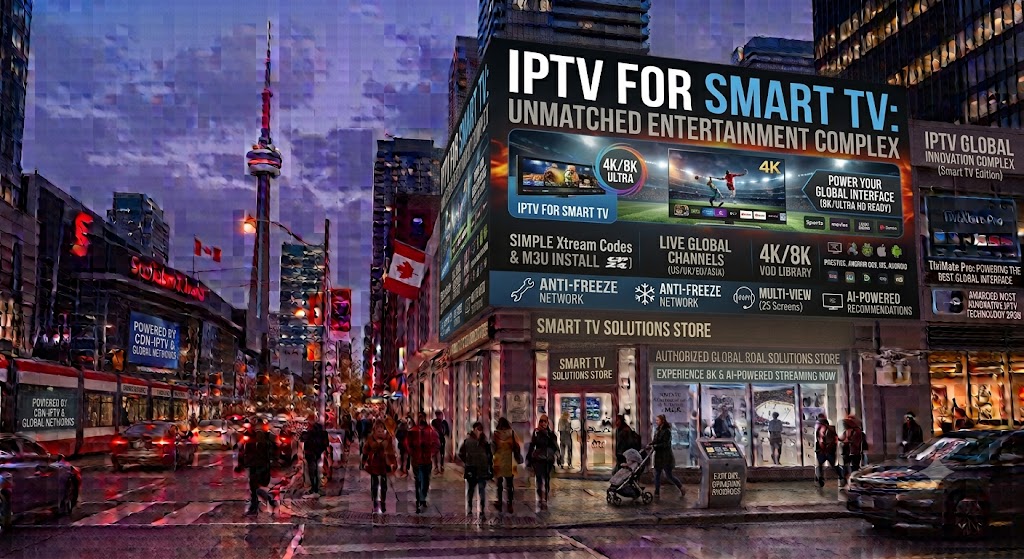
For viewers in the USA and Canada, IPTV can be particularly appealing because modern Smart TVs can connect to the internet and run compatible streaming applications without requiring a complicated setup. However, IPTV itself is a technology rather than a guarantee that every service or channel is authorized. The provider, content rights, application, and your location all matter.
This guide explains how IPTV works on Smart TVs, what you need before getting started, how to install compatible apps, what internet speed you need, how to troubleshoot common problems, and what to consider before choosing an IPTV service.
The goal is simple: help you understand your options so you can make an informed decision.
What Is IPTV for Smart TV?
IPTV for Smart TV refers to television programming delivered over an internet connection using Internet Protocol technology rather than traditional terrestrial, cable, or satellite broadcasting.
Instead of receiving a television signal through a conventional cable connection or satellite dish, an IPTV service can deliver compatible programming through the internet to an application or device connected to your Smart TV.
Depending on the service, IPTV may provide:
Live television channels
Video-on-demand content
Catch-up or replay features
Electronic program guides
Movies and television shows
Sports programming
News and entertainment
Multiple language options
Different video resolutions
The exact features and available programming depend on the service and its licensing arrangements.
Is IPTV the same as Netflix?
No.
Netflix, Disney+, Prime Video, and similar platforms are subscription streaming services with their own content libraries.
IPTV is a broader delivery technology. It can be used for live television, on-demand programming, and other forms of internet-delivered video.
An IPTV application also does not automatically provide content. In many cases, the app is simply a player that requires a legitimate subscription or playlist from a provider.
Why Use IPTV on a Smart TV?
Smart TVs are naturally suited to internet-based video because they already combine a television display with networking and application capabilities.
Using IPTV on a compatible Smart TV can provide several advantages.
1. No separate streaming box may be necessary
If your television supports the required application, you may not need another device such as a streaming stick or TV box.
That can make the setup cleaner and reduce the number of remotes you need.
2. Convenient large-screen viewing
Watching internet-delivered television on a large screen is more comfortable for many people than watching on a phone, tablet, or computer.
This can be especially useful for movies, news, sports, and family viewing.
3. Internet-based access
IPTV uses your internet connection, which means you can potentially access compatible services without a traditional cable television connection.
4. Flexible viewing options
Depending on the provider, you may have access to live channels alongside on-demand or replay features.
5. Easy integration
Many modern Smart TVs include app stores, Wi-Fi, Ethernet connectivity, and media playback capabilities, making them convenient platforms for compatible streaming services.
Which Smart TVs Support IPTV?
There is no single universal "IPTV Smart TV."
Compatibility depends on the television's operating system, model, region, application store, and the particular IPTV application or service you want to use.
Common Smart TV platforms include:
Samsung Smart TV
LG Smart TV
Google TV
Android TV
Fire TV
Roku TV
Other manufacturer-specific Smart TV platforms
A service may support one platform while offering limited or no support for another.
Before purchasing anything, check the provider's current compatibility information rather than assuming that every Smart TV supports the same apps.
IPTV for Samsung Smart TV
Samsung Smart TVs use the Tizen operating system on many models.
If an IPTV application is officially available through the Samsung app ecosystem in your region, installation can generally be performed directly from the TV.
A typical process is:
Connect your Samsung TV to the internet.
Open the TV's application store.
Search for the compatible IPTV application.
Install the application.
Open it after installation.
Enter the credentials or subscription information supplied by your legitimate provider.
Follow the application's instructions to load available content.
Application availability can vary by model and country, so always check what your particular television supports.
IPTV for LG Smart TV
LG Smart TVs commonly use webOS.
The general setup process is similar:
Connect the TV to Wi-Fi or Ethernet.
Open the LG application marketplace.
Search for a compatible IPTV player.
Install the application.
Launch the app.
Enter the required account or playlist details.
Configure the electronic program guide if the service provides one.
If an application is unavailable in your region, don't assume that installing an unofficial version is safe. Look for an officially supported alternative or use a compatible external streaming device.
IPTV for Android TV and Google TV
Android TV and Google TV can offer a wider selection of compatible applications than some manufacturer-specific Smart TV platforms.
Depending on the device and application, you may be able to install an IPTV player from the official app marketplace.
The process typically involves:
Home → Apps → Search → Select compatible IPTV application → Install → Open
After installation, the application may ask for login credentials, a playlist URL, an activation code, or other information supplied by your service provider.
Only use credentials and content sources that you are authorized to access.
What Do You Need for IPTV on a Smart TV?
Before setting up IPTV, make sure you have the following:
A compatible Smart TV
Your television needs to support the IPTV application or streaming method you intend to use.
A stable internet connection
Streaming quality depends heavily on your connection's speed and stability.
A compatible IPTV application
The application acts as the interface through which compatible content can be accessed.
A legitimate IPTV service or content source
The application alone does not determine whether content is authorized.
An account or subscription, where required
Some services require an account, while others may offer free, ad-supported, or publicly available programming.
How Much Internet Speed Does IPTV Need?
Internet speed is important, but raw download speed isn't the only factor.
Connection stability, latency, Wi-Fi interference, network congestion, and the streaming provider's infrastructure can all affect playback.
As a general starting point:
SD: around 5 Mbps
HD: around 10 Mbps
Full HD: around 20 Mbps
4K: approximately 30–50 Mbps or more
These are practical guidelines rather than universal requirements.
If several people are using the same internet connection simultaneously, you'll want additional bandwidth.
For example, someone watching a 4K stream while another person is gaming and another is downloading large files can experience buffering even when the advertised internet speed looks sufficient.
Wi-Fi vs Ethernet for IPTV
If possible, an Ethernet connection is often preferable for a Smart TV because it can provide a more consistent connection than congested wireless networks.
However, good Wi-Fi can work very well.
Choose Ethernet when:
Your router is close to the TV.
You frequently experience buffering.
The TV supports wired networking.
You want maximum connection stability.
Wi-Fi can be a good choice when:
Running an Ethernet cable isn't practical.
The TV has a strong wireless signal.
Your router is relatively close.
Your network isn't heavily congested.
For 4K streaming, reducing wireless interference can make a noticeable difference.
How to Set Up IPTV for Smart TV
The exact setup varies by application and provider, but the following workflow covers most legitimate setups.
Step 1: Check your Smart TV model
Find the exact model number in your television's settings.
This helps you determine which operating system and applications are supported.
Step 2: Check application compatibility
Look for a compatible IPTV player through your TV's official application marketplace.
Don't assume that an application available for Android TV will also be available for Samsung or LG TVs.
Step 3: Install the application
Download the application through the supported app store whenever possible.
Avoid unfamiliar downloads from random websites, especially applications requesting excessive permissions.
Step 4: Obtain legitimate service details
If you're using a paid IPTV service, follow its official setup instructions.
You may receive information such as:
Username
Password
Activation code
Playlist information
Electronic program guide information
Only use information you're authorized to use.
Step 5: Configure the application
Enter the required information and allow the application to load your available content.
Step 6: Test different channels
Try several channels or streams.
Check:
Picture quality
Audio quality
Channel loading time
Buffering
Program guide accuracy
Step 7: Optimize your network
If playback isn't stable, test your internet connection and consider moving from Wi-Fi to Ethernet.
IPTV Player vs IPTV Provider: What's the Difference?
This is one of the most important distinctions beginners should understand.
An IPTV player is software that can display compatible streaming content.
An IPTV provider is the service or source supplying the content.
Think of the player as the interface and the provider as the source.
Installing an IPTV player doesn't automatically give you access to premium television channels.
This distinction is also important when evaluating services. A polished application doesn't necessarily mean that the underlying content is reliable, authorized, or high quality.
How to Choose IPTV for Smart TV
If you're considering a service, don't make your decision based only on the number of advertised channels.
A better evaluation should consider several factors.
1. Content rights and legality
Choose services that have the appropriate rights to distribute the programming they offer.
For viewers in the USA and Canada, licensing arrangements can vary significantly between services and regions.
A provider promising thousands of premium channels for an unusually low price should be evaluated carefully.
2. Smart TV compatibility
Confirm that the service officially supports your exact platform.
3. Streaming reliability
A huge channel list isn't useful if streams constantly stop or buffer.
Look for transparent information about infrastructure, support, and service availability.
4. Video quality
Check whether the service supports the resolution you actually need.
Don't pay extra for 4K if your TV, network, or content doesn't meaningfully benefit from it.
5. Electronic Program Guide
A good EPG can make live television much easier to navigate.
6. Customer support
Look for a provider that offers clear support channels and setup documentation.
7. Payment transparency
Be cautious of services with unclear billing, hidden renewal terms, or payment methods that provide little consumer protection.
8. Privacy and security
Avoid giving unnecessary personal information to unknown services.
IPTV for Smart TV in the USA
American viewers may want access to local news, national networks, sports, entertainment, and international programming.
However, availability is often affected by geographic licensing.
A service that legally offers a particular channel in one region may not have the rights to distribute it in another.
Before subscribing, check:
Channel availability in your state
Local network availability
Sports rights
Regional restrictions
Supported Smart TV platform
Subscription terms
For local broadcast programming, viewers should also consider legitimate broadcaster apps and established streaming services.
IPTV for Smart TV in Canada
Canadian viewers face similar licensing considerations.
Depending on your needs, you may be interested in Canadian news, sports, entertainment, international channels, or multilingual programming.
Before subscribing, verify that the service legally provides the programming you want to watch in Canada.
Also check whether your desired application is available through your Smart TV's Canadian app marketplace.
Common IPTV Smart TV Problems
Even with a legitimate service, technical issues can occur.
IPTV keeps buffering
Possible causes include:
Weak Wi-Fi
Network congestion
Slow internet
Router problems
Server-side congestion
Too many devices using the connection
Try restarting your router and TV first.
If possible, test Ethernet.
IPTV app won't install
Your TV may not support the application.
Check the television's operating system, model year, region, and available app store.
Channels won't load
Check your account credentials and subscription status.
If other applications work normally but one IPTV service doesn't, the problem may be associated with the service itself.
IPTV picture quality is poor
Check whether the application is selecting a lower-quality stream automatically.
Also verify that your internet connection is stable enough for the selected resolution.
Audio works but video doesn't
Restart the application and TV.
If the issue continues, the stream may use a format or codec that your television/application doesn't support.
Common Mistakes to Avoid
Choosing a service only because it has thousands of channels
More channels don't automatically mean better value.
Ignoring licensing
The technology may be legal, but individual content sources can have different rights.
Using suspicious applications
Avoid installing unknown APKs or software from untrusted sources simply because an application isn't available through your official TV marketplace.
Assuming 4K means better streaming
4K requires more bandwidth and compatible hardware. A stable HD stream can provide a better experience than an unstable 4K stream.
Forgetting about your home network
Your IPTV experience depends partly on everything else happening on your network.
Paying for long subscriptions immediately
If a provider is unfamiliar, understand its service, support, refund policy, and terms before committing to a long billing period.
Is IPTV Legal in the USA and Canada?
IPTV technology itself is not inherently illegal.
The important issue is whether the service has the necessary rights to distribute the content it provides.
Legitimate broadcasters, streaming platforms, and television services can use internet-based delivery.
The legal concern arises when a provider distributes copyrighted programming without authorization.
For consumers, a sensible approach is to choose transparent services, verify their licensing claims where possible, and avoid services that advertise unauthorized access to premium content.
If you have a specific legal concern, consult current guidance from the relevant authorities or a qualified legal professional.
Can You Use IPTV Without Cable?
Yes.
An internet-based television service can operate without a traditional cable television subscription.
You generally need:
Compatible Smart TV
Internet connection
Compatible application
Legitimate streaming service or content source
However, "without cable" doesn't mean "without internet." IPTV depends on network connectivity.
Is IPTV Better Than Cable?
There isn't one answer for everyone.
IPTV can provide flexibility and internet-based access, while traditional cable may offer established channel packages, local programming, equipment support, and bundled services.
The better choice depends on your viewing habits, budget, location, preferred channels, and internet reliability.
For many cord-cutters, the most important question isn't whether IPTV is universally better than cable, but whether a particular legal streaming service provides the content and reliability they actually need.
Smart Tips for a Better IPTV Experience
Use Ethernet where practical
A wired connection can reduce wireless-related instability.
Keep your TV software updated
Firmware and application updates can improve compatibility and security.
Restart occasionally
A simple TV, router, and application restart can resolve temporary problems.
Avoid unnecessary background traffic
Large downloads and multiple simultaneous streams can consume bandwidth.
Use the appropriate video quality
Select a quality level that your connection can consistently handle.
Research before subscribing
Look beyond channel counts. Investigate compatibility, support, billing, terms, and content rights.
Frequently Asked Questions
1. What is IPTV for Smart TV?
IPTV for Smart TV is internet-delivered television that can be viewed through a compatible application or Smart TV platform. It can support live television and, depending on the service, on-demand programming and other features.
2. Can I watch IPTV directly on my Smart TV?
Yes, if your Smart TV supports a compatible IPTV application or service. Compatibility varies between Samsung, LG, Google TV, Android TV, Roku TV, and other platforms.
3. Do I need a Firestick for IPTV?
No. A Firestick is not always necessary. If your Smart TV supports the required application directly, you may be able to use IPTV without an external streaming device.
4. What internet speed is best for IPTV?
Around 10 Mbps can be a reasonable starting point for HD streaming, while Full HD and 4K generally require more bandwidth. A stable connection is just as important as advertised speed.
5. Can IPTV work over Wi-Fi?
Yes. IPTV can work well over Wi-Fi when the television has a strong, stable connection. Ethernet can be preferable when buffering or wireless interference is a problem.
6. Can I use IPTV on Samsung Smart TV?
Potentially, yes. Compatibility depends on the Samsung model, Tizen version, region, and IPTV application. Check the Samsung app marketplace and the provider's current compatibility information.
7. Can I use IPTV on LG Smart TV?
Yes, compatible IPTV applications can be used on supported LG Smart TVs. Availability depends on the TV's webOS version, region, and application support.
8. Is IPTV legal in Canada and the USA?
IPTV technology is legal. However, a particular service must have appropriate rights to distribute the content it offers. Consumers should choose authorized services and avoid unauthorized content sources.
9. Why does IPTV keep buffering on my Smart TV?
Buffering can result from weak Wi-Fi, network congestion, insufficient bandwidth, router problems, or issues on the streaming provider's side. Testing Ethernet can help identify whether Wi-Fi is the problem.
10. Is an IPTV app the same as an IPTV subscription?
No. An IPTV app is generally a player or interface. A subscription or authorized content source provides the programming. Some services may combine both elements into one product.
Final Thoughts: Choosing IPTV for Smart TV
IPTV for Smart TV can be a convenient way to access internet-delivered television on a large screen, but the quality of your experience depends on more than simply installing an app.
Start by checking your Smart TV's compatibility. Then make sure your internet connection is reliable, choose an appropriate application, and evaluate any provider based on content availability, reliability, support, pricing transparency, privacy, and—most importantly—whether it has the necessary rights to distribute its programming.
The best IPTV setup isn't necessarily the one with the biggest channel list. It's the one that provides the content you actually want, on the device you already own, with reliable performance and legitimate access.
About the Author
SEO & Streaming Technology Content Team
This guide was created to provide practical, easy-to-understand information about IPTV technology, Smart TV compatibility, streaming setup, internet requirements, and responsible service selection. Content is written with a user-first approach and focuses on clear explanations rather than exaggerated claims.
Comment as Guest