IPTV for Smart TV: Complete Streaming Guide 2026
Discover how IPTV for Smart TV works, its benefits, features, pricing, compatible devices, setup tips, alternatives, and future trends.
IPTV for Smart TV: Complete Guide to Streaming in 2026
Introduction
Television viewing has changed dramatically as more people move from traditional cable and satellite services to internet-based entertainment. IPTV for Smart TV is one of the most convenient ways to watch television content through an internet connection instead of relying entirely on conventional broadcasting methods.
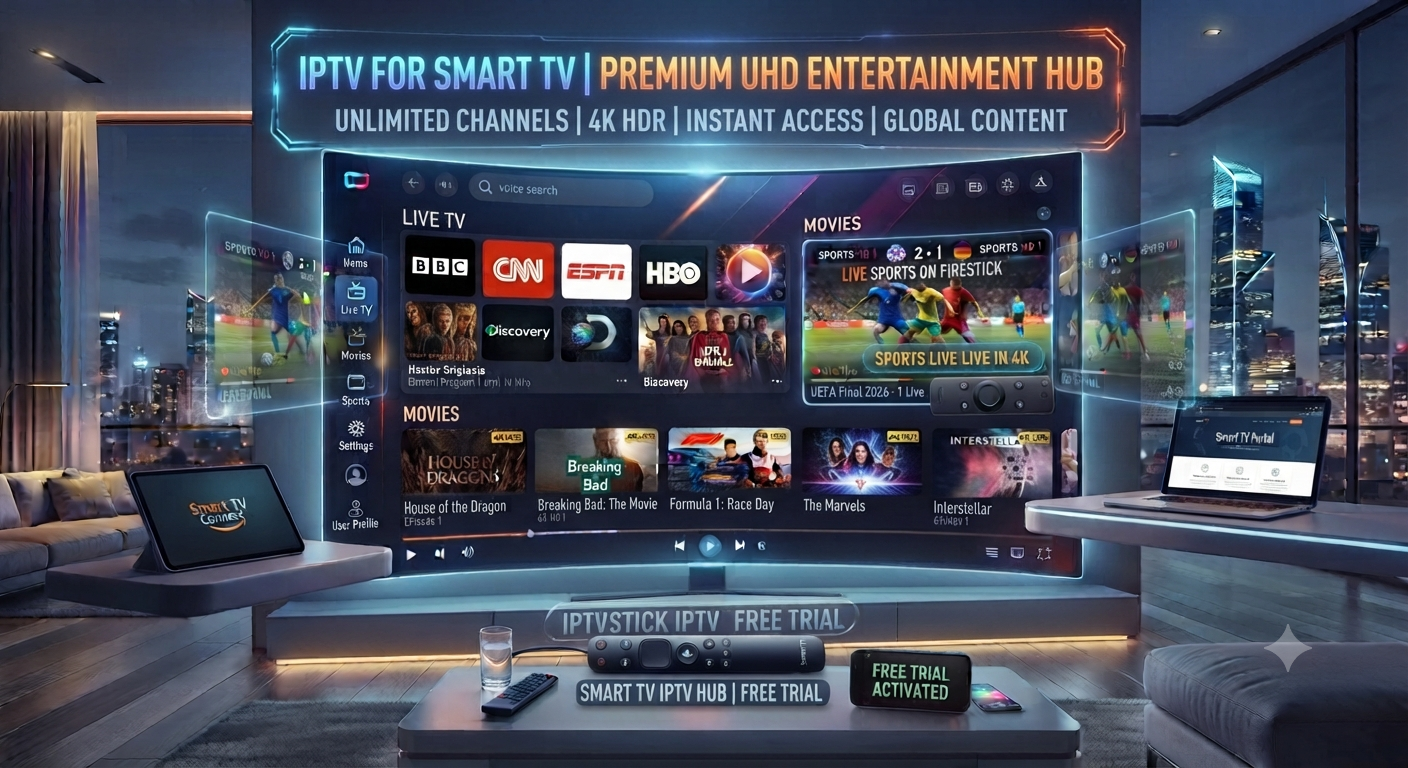
For learners, freelancers, startups, small business owners, families, and entertainment enthusiasts, IPTV can offer a flexible viewing experience across compatible Smart TVs and streaming devices. Depending on the provider and location, users may access live television, video-on-demand content, catch-up programming, movies, sports, news, and international channels.
However, choosing an IPTV service requires more than looking at the number of channels advertised. Reliability, legal licensing, streaming quality, device compatibility, customer support, privacy, pricing, and available features should all be considered.
This guide explains everything you need to know about IPTV for Smart TV in 2026, including how it works, important features, potential advantages and disadvantages, provider considerations, alternatives, setup guidance, and future trends.
What Is IPTV for Smart TV?
IPTV stands for Internet Protocol Television. Instead of delivering television programming through traditional cable, satellite, or terrestrial broadcasting, IPTV uses internet networks to deliver video content.
When IPTV is used on a Smart TV, compatible applications or built-in platforms can provide access to supported IPTV services. Some services offer live channels, while others focus primarily on on-demand entertainment.
A typical IPTV setup may include:
A Smart TV with internet connectivity
A compatible IPTV application
A legitimate IPTV subscription or service
A stable broadband connection
Login credentials or an authorized playlist provided by the service
It is important to understand that IPTV is a technology, not a specific channel package or provider. The legality and availability of content depend on the service provider and whether it has the necessary rights to distribute that content in your country.
Why IPTV for Smart TV Matters in 2026
Smart TVs are increasingly becoming all-in-one entertainment platforms. Users can stream movies, television programs, music, live broadcasts, and other digital content without connecting multiple traditional devices.
IPTV fits naturally into this environment because it can combine internet-based television with the convenience of a large-screen display.
In 2026, viewers are also more interested in flexibility. Rather than being tied to a traditional television package, many users want services that match their viewing habits, devices, budget, and preferred content.
For freelancers and small business owners, internet-based television can also be useful in offices, waiting areas, lounges, hospitality environments, and shared spaces, provided the content is properly licensed for the intended use.
Key Benefits of IPTV for Smart TV
1. Convenient Large-Screen Viewing
A Smart TV provides a much larger viewing experience than a smartphone or computer. Once a compatible IPTV service is configured, users can enjoy supported content directly on their television.
2. Flexible Entertainment
Depending on the provider, IPTV packages may include live television, movies, documentaries, news, sports, international programming, and on-demand content.
3. Internet-Based Delivery
IPTV uses an internet connection, allowing television content to be delivered through an existing broadband network.
4. Multiple Content Categories
A good legitimate service may organize content into categories such as entertainment, news, sports, children's programming, movies, and international channels.
5. Electronic Program Guides
Many IPTV platforms support an EPG, or Electronic Program Guide. An EPG makes it easier to browse available programs and understand what is currently playing or scheduled.
6. On-Demand Content
Some services provide video-on-demand libraries, allowing subscribers to select available movies or programs rather than watching only scheduled broadcasts.
7. Modern User Experience
Depending on the application, IPTV interfaces can provide search functions, favorites, categories, playback controls, subtitles, parental controls, and other modern streaming features.
Top IPTV Providers, Tools, and Services
There is no single IPTV provider that is automatically the best for every viewer. Availability, pricing, licensing, supported applications, channels, and features vary significantly by country.
When evaluating a provider, consider these categories:
Licensed TV and Streaming Services
Legitimate television and streaming providers are generally the safest starting point because they operate under defined content-distribution agreements.
Look for services that clearly explain:
Which channels they provide
Which countries they support
Whether content is officially licensed
Compatible Smart TV platforms
Subscription terms
Refund policies
Customer support options
IPTV Player Applications
An IPTV player is different from an IPTV content provider. A player may allow users to access an authorized IPTV playlist or service through a Smart TV.
Popular player categories include applications designed for Smart TVs, Android TV platforms, Fire TV devices, and other compatible streaming hardware.
Always verify that the application supports the legitimate service you intend to use.
Smart TV Native Applications
Some television manufacturers and operating systems provide access to streaming applications through their official app stores. This can simplify installation and reduce compatibility problems.
Features to Look For
Choosing IPTV for Smart TV should involve more than comparing channel counts.
Compatibility
Check whether the service supports your Smart TV operating system. Compatibility can vary between television brands and operating systems.
Streaming Quality
Look for services that clearly explain supported resolutions. Common quality levels include SD, HD, Full HD, and 4K where available.
Stable Playback
A reliable service should provide consistent playback under normal network conditions. Buffering can be caused by the service, home network, Wi-Fi interference, device limitations, or insufficient bandwidth.
Electronic Program Guide
An EPG can make hundreds or thousands of available programs easier to navigate.
Catch-Up or Replay
Some services allow users to watch previously broadcast programs where the provider has the necessary rights and technology.
Multi-Device Support
If you use more than one television or streaming device, check whether your subscription permits multiple authorized connections.
Customer Support
Good customer support can be particularly important when installing an application, troubleshooting playback, or managing a subscription.
Security and Privacy
Use reputable services and applications. Avoid unknown providers requesting unnecessary personal information, suspicious downloads, or unusual payment methods.
IPTV Pricing: What Should You Expect?
IPTV pricing varies considerably depending on the provider, country, content rights, resolution, number of supported devices, and subscription duration.
Instead of choosing a service solely because it is cheap, compare the overall value.
Typical pricing categories include:
Free: Usually limited, advertising-supported, publicly available, or trial-based content. Free does not automatically mean comprehensive or reliable.
Monthly plans: Useful for users who want flexibility and minimal long-term commitment.
Quarterly plans: May provide savings compared with paying month-to-month.
Annual plans: Often offer a lower effective monthly cost but require greater commitment.
Premium packages: May include additional features, higher-quality content, or broader authorized channel selections.
Always check the provider's current price, cancellation terms, taxes, and renewal conditions before subscribing.
IPTV for Smart TV: Best For
Best for Families
Families can benefit from organized television content, parental controls, multiple categories, and convenient large-screen viewing.
Best for Freelancers
Freelancers who work from home may appreciate having entertainment available through the same Smart TV without installing complicated hardware.
Best for Startups and Small Businesses
Businesses may use properly licensed television content in reception areas, lounges, hospitality environments, or employee spaces. Commercial viewing rights should always be confirmed before displaying content publicly.
Best for International Viewers
People interested in international programming may find internet-based television useful when legitimate services offer authorized content for their region.
Best for Technology Learners
Students and technology enthusiasts can use IPTV as an example of how internet protocols, streaming infrastructure, applications, content delivery, and connected television platforms work together.
Use Cases for IPTV
IPTV for Smart TV can support several legitimate viewing scenarios.
Home entertainment: Watch authorized live and on-demand programming on a large screen.
International programming: Access legally distributed channels from different regions where available.
Educational viewing: Use legitimate educational and documentary programming for learning.
Hospitality: Hotels and guest accommodations may use licensed television services designed for commercial environments.
Business environments: Offices can display authorized news or entertainment content where appropriate.
Pros and Cons of IPTV for Smart TV
Pros
Convenient internet-based television
Large-screen viewing
Potential access to live and on-demand programming
Flexible subscription options
Modern interfaces
EPG support on many platforms
Compatible with many modern Smart TVs and streaming devices
Potential access to international content
Cons
Requires a reliable internet connection
Quality can vary between providers
Compatibility differs between Smart TV platforms
Some services may have limited geographic availability
Legitimate content licensing is essential
Poor-quality providers may experience buffering or outages
Some advanced features may require premium subscriptions
How to Choose the Right IPTV Service
Step 1: Check Your Smart TV
Identify the operating system and model of your television.
Step 2: Check Service Compatibility
Confirm that the IPTV provider or player officially supports your TV platform.
Step 3: Review Content
Do not focus only on the total channel number. Check whether the specific channels and content categories you actually want are available legally.
Step 4: Compare Streaming Quality
If you have a 4K television, verify whether the service genuinely supports 4K content rather than assuming every channel will stream at that resolution.
Step 5: Check Internet Requirements
A stable connection is essential. As a general starting point, HD streaming may require around 10 Mbps or more, while 4K streaming can require substantially more bandwidth depending on compression and service quality.
Step 6: Review Subscription Terms
Check billing frequency, renewal policies, cancellation options, refunds, and supported payment methods.
Step 7: Test Before Committing
If a legitimate provider offers a free or low-cost trial, use it to evaluate compatibility, picture quality, navigation, and reliability before purchasing a longer plan.
Best Alternatives to IPTV
IPTV is not the only way to watch television online.
Traditional Cable TV
Cable can provide predictable channel packages and dedicated infrastructure but may be less flexible than internet-based alternatives.
Satellite TV
Satellite television can be useful in areas where broadband infrastructure is limited. It generally requires satellite equipment and installation.
Live TV Streaming Services
Internet-based live TV platforms can provide authorized television channels through dedicated streaming applications.
Free Ad-Supported Streaming
Some legitimate platforms provide free movies, television programs, news, or live channels supported by advertising.
Individual Streaming Services
Subscription video-on-demand platforms can be suitable for users who primarily watch movies and series rather than live television.
Future Trends in IPTV and Smart TV Streaming
The IPTV ecosystem is likely to continue evolving alongside Smart TV technology.
Smarter Personalization
Recommendation systems can help viewers discover content based on viewing habits and preferences.
Better 4K Streaming
As broadband networks improve, higher-resolution streaming is becoming increasingly practical for compatible content.
Cloud-Based Features
Cloud infrastructure can support features such as synchronized viewing data, content management, and improved service scalability.
Improved Search
Voice search and AI-powered discovery may make it easier to find programs across different streaming platforms.
Greater Platform Integration
Smart TVs are increasingly designed as central entertainment hubs, bringing applications, live channels, streaming services, and connected devices together.
Stronger Content Protection
As streaming grows, legitimate providers are expected to continue investing in authentication, digital rights management, account security, and anti-piracy technologies.
Common Mistakes to Avoid
One of the biggest mistakes is selecting a provider solely because it advertises an extremely large number of channels at an unusually low price.
Other mistakes include:
Ignoring content licensing
Failing to check Smart TV compatibility
Choosing an unreliable application
Assuming every advertised channel is available in every country
Not reading subscription renewal terms
Using an unstable Wi-Fi connection
Expecting every channel to be available in 4K
Sharing account credentials against the provider's terms
Frequently Asked Questions
What is IPTV for Smart TV?
IPTV for Smart TV refers to delivering television content over an internet connection and watching it through a compatible Smart TV application or platform.
Can I use IPTV directly on a Smart TV?
Yes, if your television supports a compatible IPTV application or the service provides an official Smart TV application.
Does IPTV require the internet?
Yes. IPTV relies on an internet or IP-based network connection to deliver content.
Is IPTV legal?
IPTV technology itself is legal. However, individual services must have the appropriate rights to distribute the television channels and other content they offer. Users should choose legitimate, licensed services.
What internet speed is best for IPTV?
The required speed depends on resolution, compression, network congestion, and the service. HD streaming commonly benefits from around 10 Mbps or more, while 4K streaming generally requires significantly more bandwidth.
Can I watch IPTV in 4K?
Some legitimate IPTV services offer 4K content, but 4K availability depends on the provider, specific program, device, application, and internet connection.
Can IPTV work on all Smart TVs?
No. Compatibility depends on the television's operating system, application availability, and provider support. Always check compatibility before subscribing.
Is a free IPTV service worth using?
Free services can be useful when they are legitimate and officially authorized, but users should be cautious about services offering copyrighted premium content without clear licensing.
Can I use IPTV on multiple devices?
Some services support multiple authorized devices or simultaneous streams. The exact number depends on the subscription terms.
Why does IPTV buffer?
Buffering can result from slow internet, weak Wi-Fi, network congestion, device limitations, application problems, or issues on the provider's side.
Should I use Wi-Fi or Ethernet for Smart TV IPTV?
Ethernet can provide a more stable connection when available. A strong 5 GHz Wi-Fi connection can also work well when the router and television are positioned appropriately.
How do I choose the best IPTV service?
Compare legality, content availability, Smart TV compatibility, streaming quality, reliability, customer support, pricing, device limits, and subscription terms rather than relying only on channel counts.
Conclusion
IPTV for Smart TV offers a modern approach to television viewing by combining internet connectivity with the convenience of a large-screen Smart TV. For families, learners, freelancers, startups, and small business owners, it can provide a flexible way to access legitimate live and on-demand programming.
The most important factor is not simply finding the service with the largest channel list. A better approach is to evaluate content licensing, compatibility, reliability, streaming quality, features, pricing, privacy, and customer support.
Before subscribing, check whether the provider legally offers the content in your country, whether it supports your Smart TV, and whether its subscription terms match your needs. If a legitimate trial is available, testing the service before purchasing a longer plan can help you make a more informed decision.
As Smart TVs become increasingly connected and streaming technology continues to improve, IPTV and other internet-based television services are likely to remain an important part of the modern entertainment ecosystem.
Author Bio
About the Author:
The author is an SEO content strategist and technology writer focused on streaming technology, Smart TV platforms, digital entertainment, and consumer technology. Their approach combines practical research, user-focused explanations, and responsible recommendations to help readers make informed technology decisions.
Comment as Guest